Preserving Memories: A Personal Journey Through 35mm Film
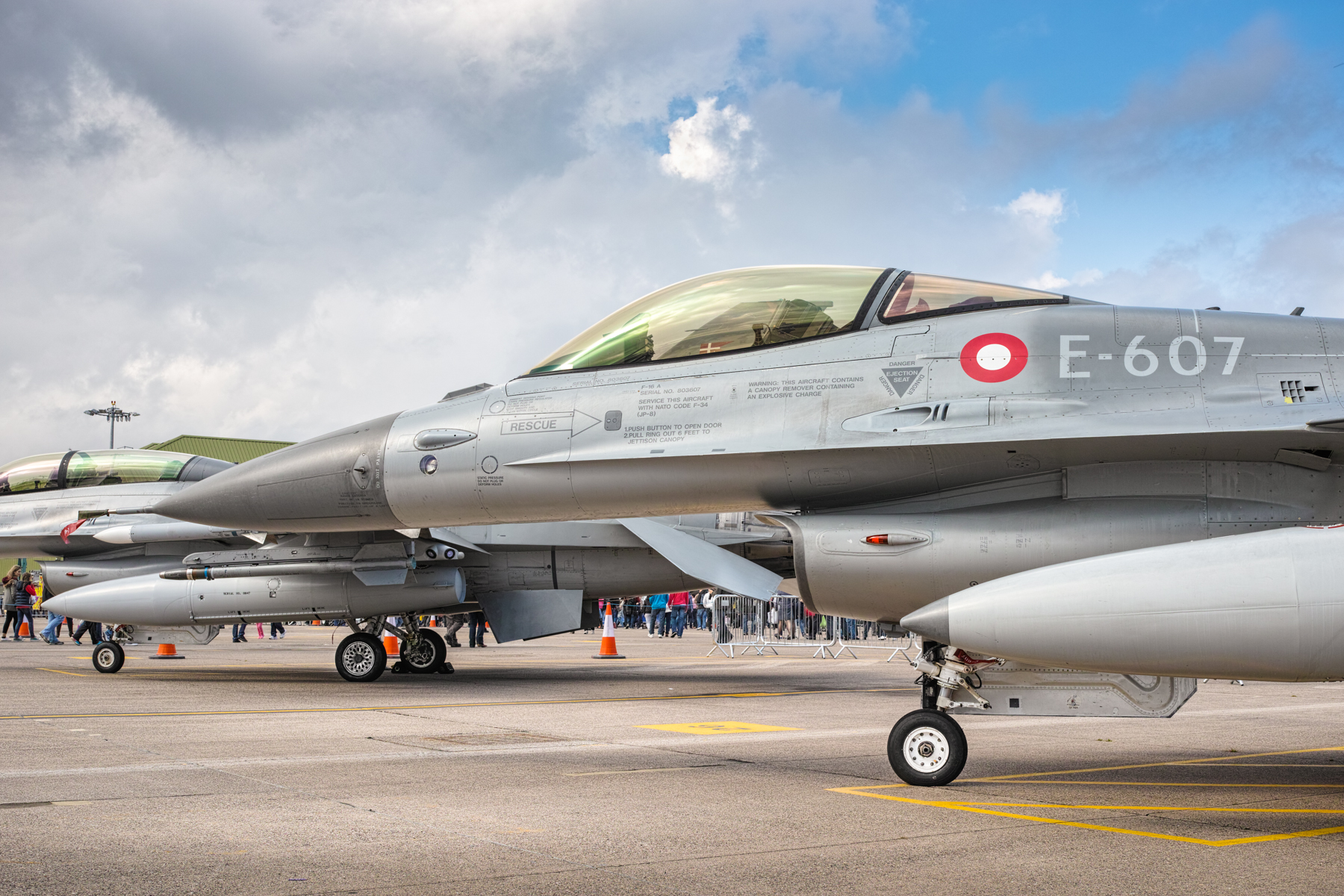
I haven’t posted in a while due to personal reasons. During this time, I’ve been browsing through my extensive film archives and reflecting on cherished memories. Alongside family and friends captured in many rolls of film, I also have a comprehensive collection of aircraft photographs spanning the last 40 years.
From sleek fighters and vintage prop planes to experimental designs and airshow spectacles, each frame tells a story of engineering, elegance, and airborne ambition. These images aren’t just pictures; they represent moments suspended in time, chronicling my lifelong fascination with aviation.



However, as the years pass, the urgency to preserve these images grows. Film curls, fades, and gathers dust. Scanning them digitally isn’t just about convenience—it’s about safeguarding history, honouring friends and family, and unlocking the full potential of each shot. Therefore, I decided to explore options for digitally scanning these libraries to preserve both personal memories and the history of aviation.
This led me to design a new type of 35mm film holder for digital scanning—one built not only for precision but also for passion. It’s a tool that respects the fragility of film while delivering the flatness, fidelity, and ease needed for high-quality digital scans.


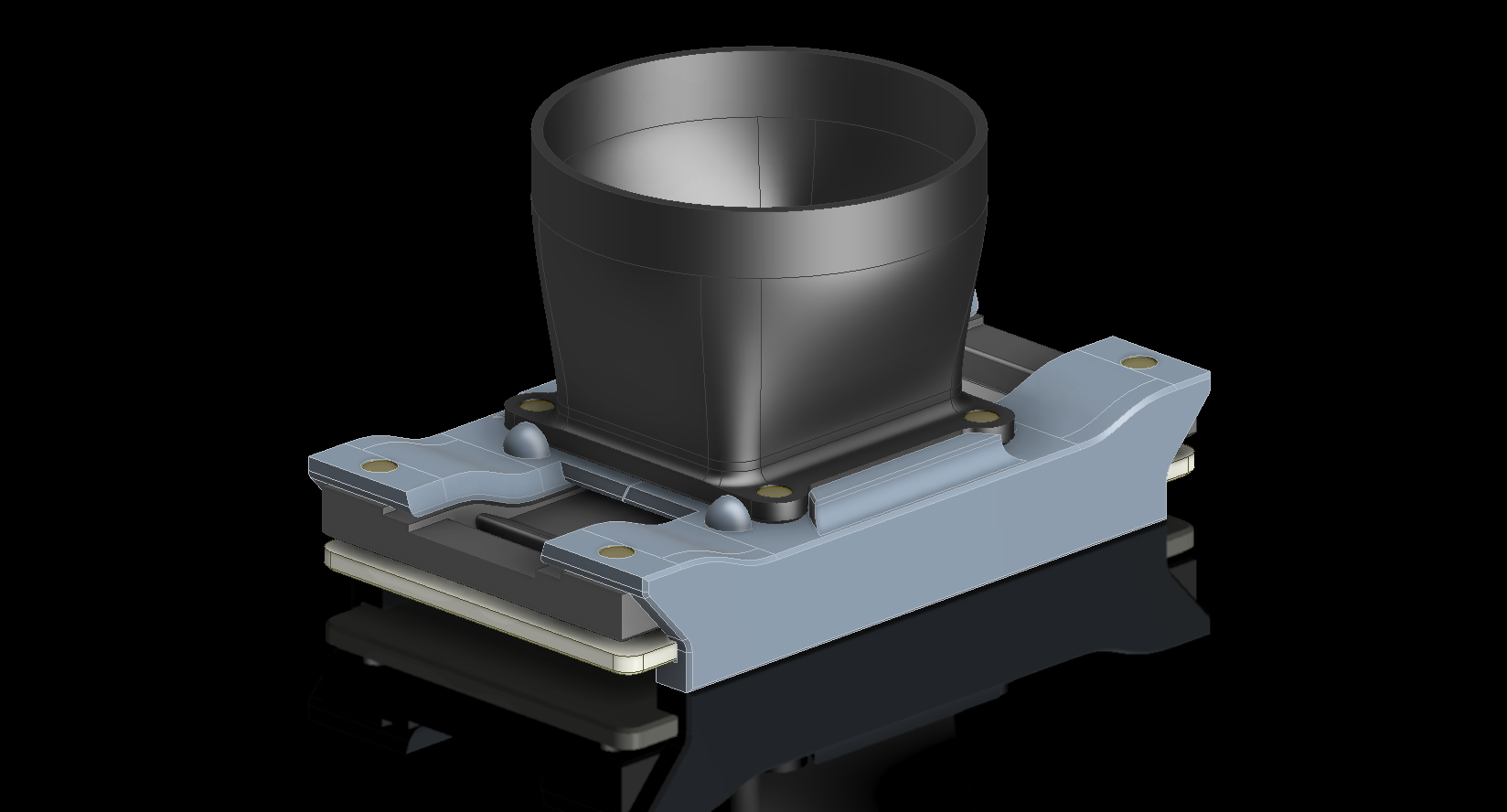
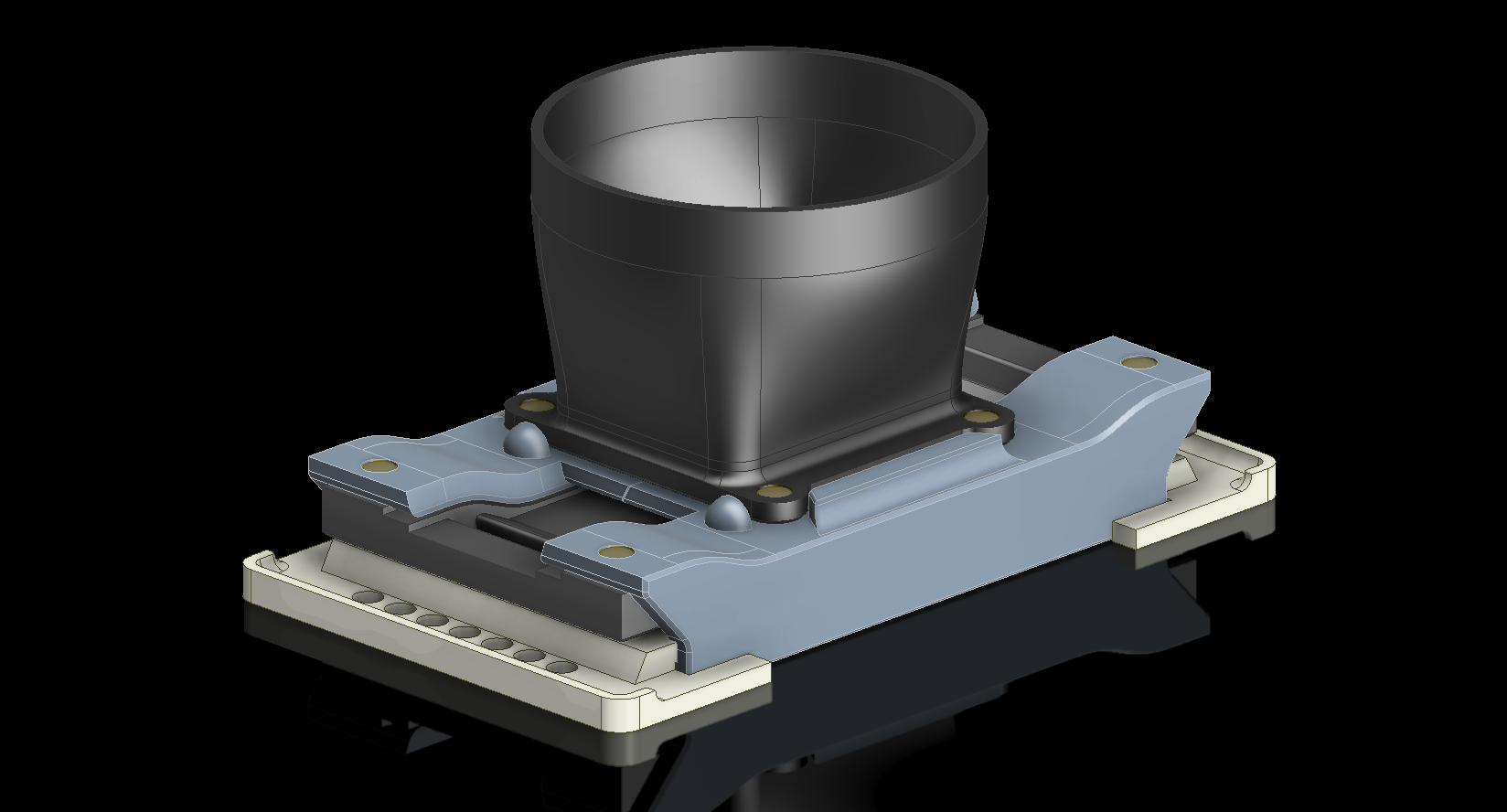


From top left:
Film Holder, Film Holder with Hood, Film Holder with optional Diffuser, Film Holder with Spacers to fix location on CineStil Light box, 35mm Mounted Slides sit on top and held in place by magnetic Hood and finally a plan view of the complete assembly.
This Film Holder is designed to be Resin printed on the smallest build plate using the minimum amount of Resin. For the prototypes, I am using the Anycubic ABS-Like. It features an S-Curve guide track for the negative or slide film strips. This S-Curve is actually a mathematical matching of second-degree curves to ensure surface continuity instead of 2 tangent arcs. This S-Curve removes the physical curves typically found in film strips to ensure flatness at the viewing window. The S-curve is not a new innovation; in fact, I have examples of film holders for the rather old Epson 4870 flat-bed scanner, which has this feature, but only for 120 film.
Incidentally, second-degree curves are essentially the building blocks that define the conic profiles of the P-51 Mustang.
I did some research on current commercially available options. Most off-the-shelf film holders suffer from a few persistent issues:
- Curling and warping of negatives, especially older or heat-exposed strips
- Inconsistent flatness, leading to soft scans and uneven focus
- Enclosed loading slots that risk scratching or misalignment
As an aeronautical engineer and product redesign specialist, I saw an opportunity to rethink the film holder from the ground up—merging mechanical precision with modern usability at minimum cost.
I still have the copy stand to design and, of course, get my hands on a 1:1 macro lens. I currently have access to a friend’s camera and lens setup for a few days for testing, but in the long term, I need to try and raise funds for a more permanent camera and lens solution…currently looking at the Sony A7 III with 70mm Macro…a full frame, rather expensive, but worthwhile combination to achieve the optimum reproduction fidelity of the original.
I will update this post shortly with images of the final product…so watch this space!
For more information or inquiries, please drop me a line at: hughtechnotes@gmail.com
Update 17th Sept 2025: Some Renderings of the final product showing the configuration for mounted 35mm slides:


Footnote:
Of course I am still continuing my work on various aircraft ordinate studies, which will also now include the full DWG profiles for every listed fuselage frame and wing ribs. That is a lot more work than I intended with these packages, as the dimensional information is already listed in spreadsheets. I appreciate that not everyone has access to CAD and perhaps not the experience to develop profiles from spreadsheets; instead, they just want to get something made…so the information needs to be more accessible and usable.
 Aviation CAD TechNotes