North American P-51 Mustang: Air Scoop
Working with ordinates from these archive drawings can be a very time intensive operation. To give some idea of the content of this work I have just started working through the vast amounts of ordinate data for the Air Scoop and Oil Cooler.
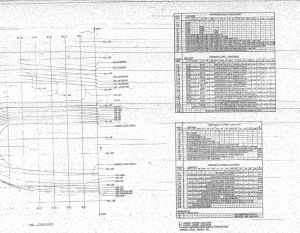 This is a scrap view of the original NAA drawings showing the main ordinates for the Air Scoop.
This drawing shows 2 tables, one of which is the listing for the external contours and the other the internal contours.
The external ordinates comprises a total of 664 points and the internal ordinates comprise a total of 928 ordinate points.
Each point is manually entered into a spreadsheet which lists the Inch dimensions and then converted to Millimeter dimensions. The data has 3 values for the Station location, the Waterline (value along a horizontal axis relative to the ship ctr line at set intervals) and the Buttock line (value along a vertical axis relative to Frame Ref Line ).

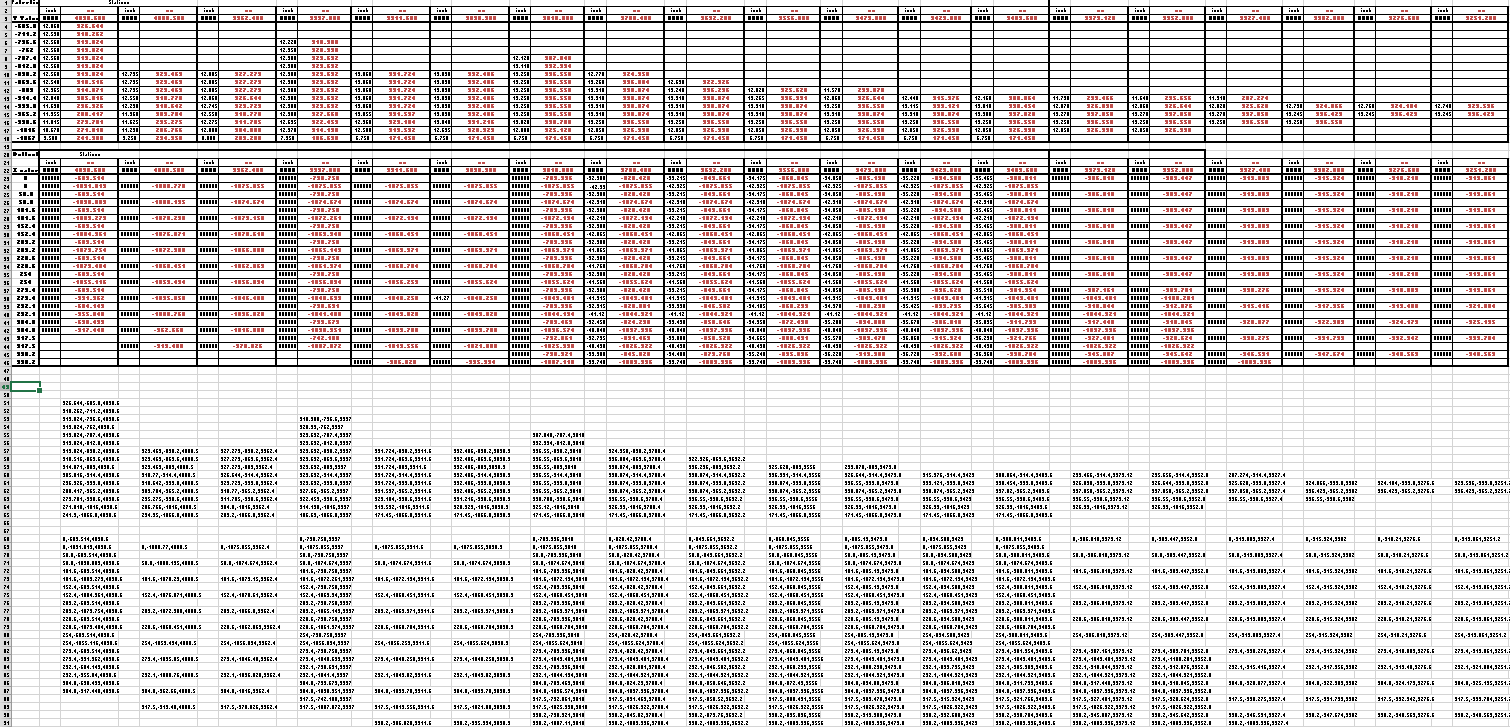
These values are then processed using the concatenate function in Excel to extrapolate the required X,Y,Z coordinates.
The points are then grouped and imported into Autocad to derive a point cloud.
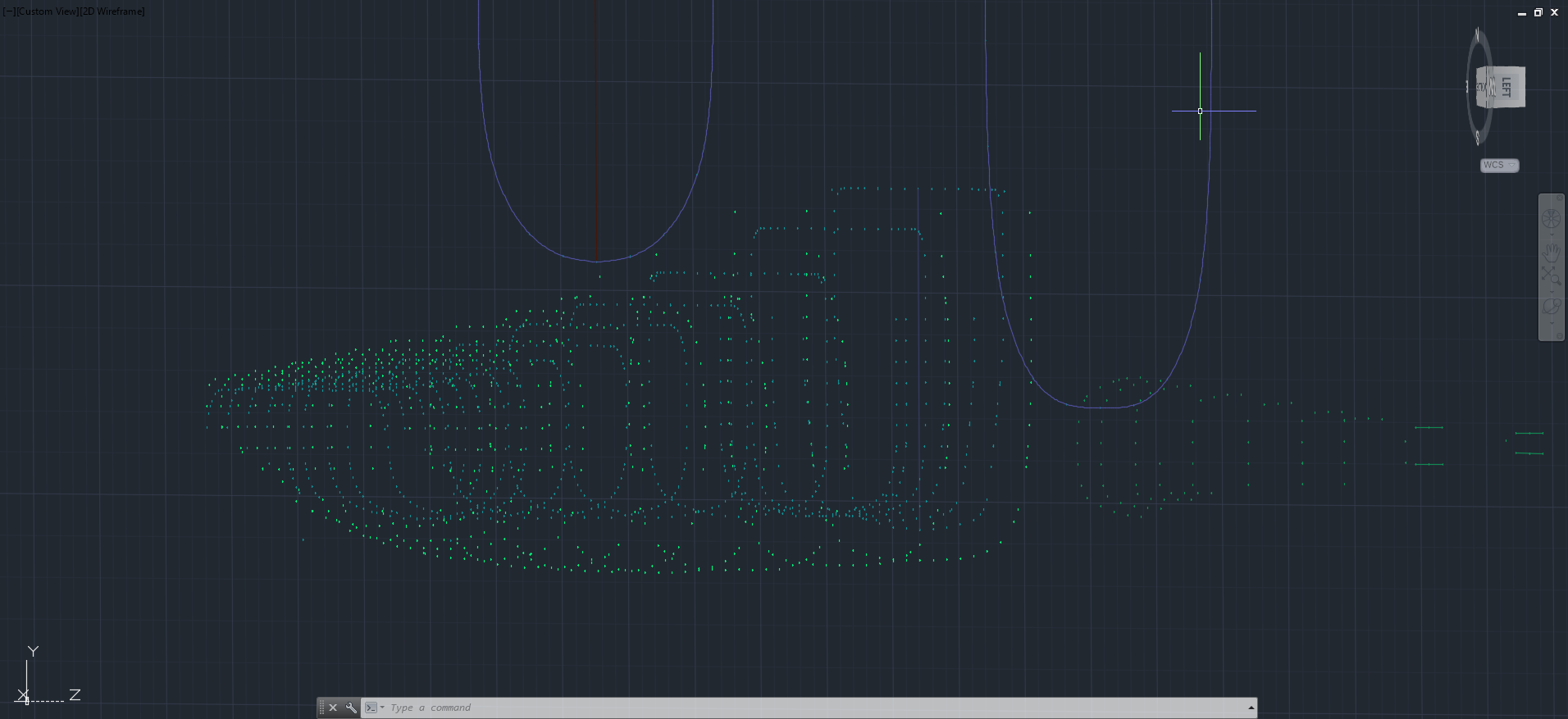
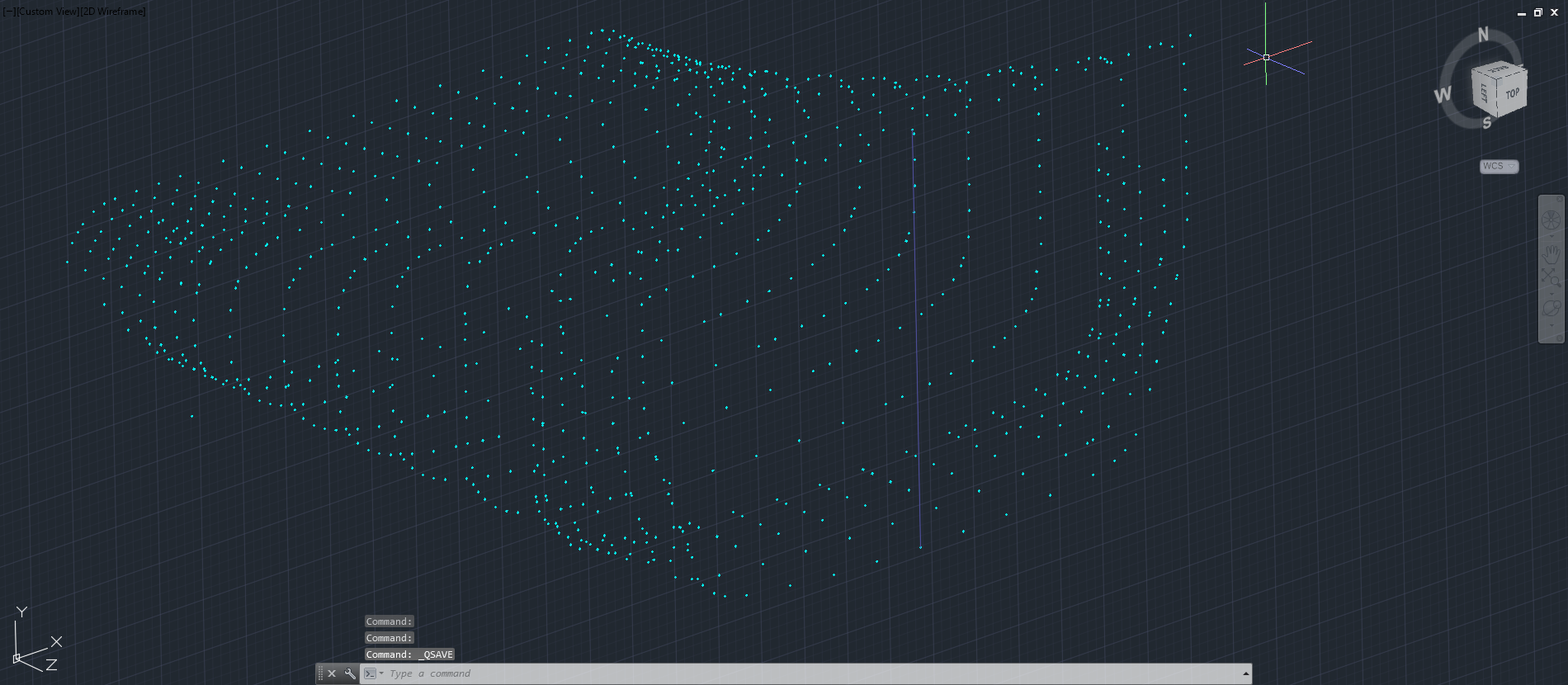
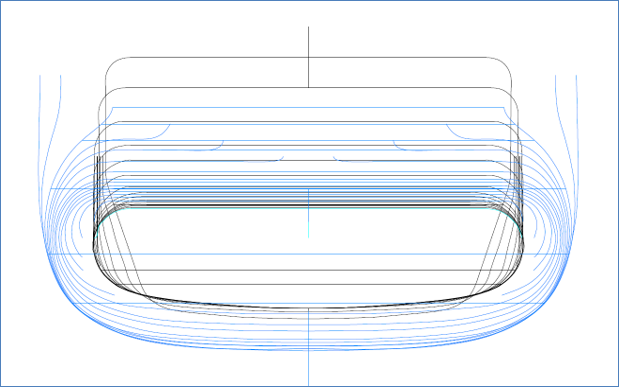
The first screenshot is all points combined with the local fuselage contours shown for reference; the second screenshot is the internal point cloud. All these points would then be contoured in Autocad to determine suspect locations and any orphaned points.
The external point cloud had 6 points prominently out of sync with everything else which turned out to be an error in the original data set. This is not uncommon and is usually quickly resolved.
Once I have an initial dataset that satisfies these primary requirements I would then import this data into Inventor or Solidworks for evaluation as a surface in each case.
At this stage, I have spent about 3 days on the data preparation and would expect to spend at least a week to properly evaluate the surface definitions.
It can be very satisfying work when you see for the first time all these data points translated into something tangible as a 3D model depicting the end product first realized all those decades ago.
Update: Decided to pull out all the stops and complete the datasets and point clouds:


 Aviation CAD TechNotes